On this page
Overview
- Bulk solids do not load a silo like a liquid in a tank.
- Material properties, filling and discharge arrangements affect the load cases.
- Changes to outlets or conveying can affect the structure and need specialist review.
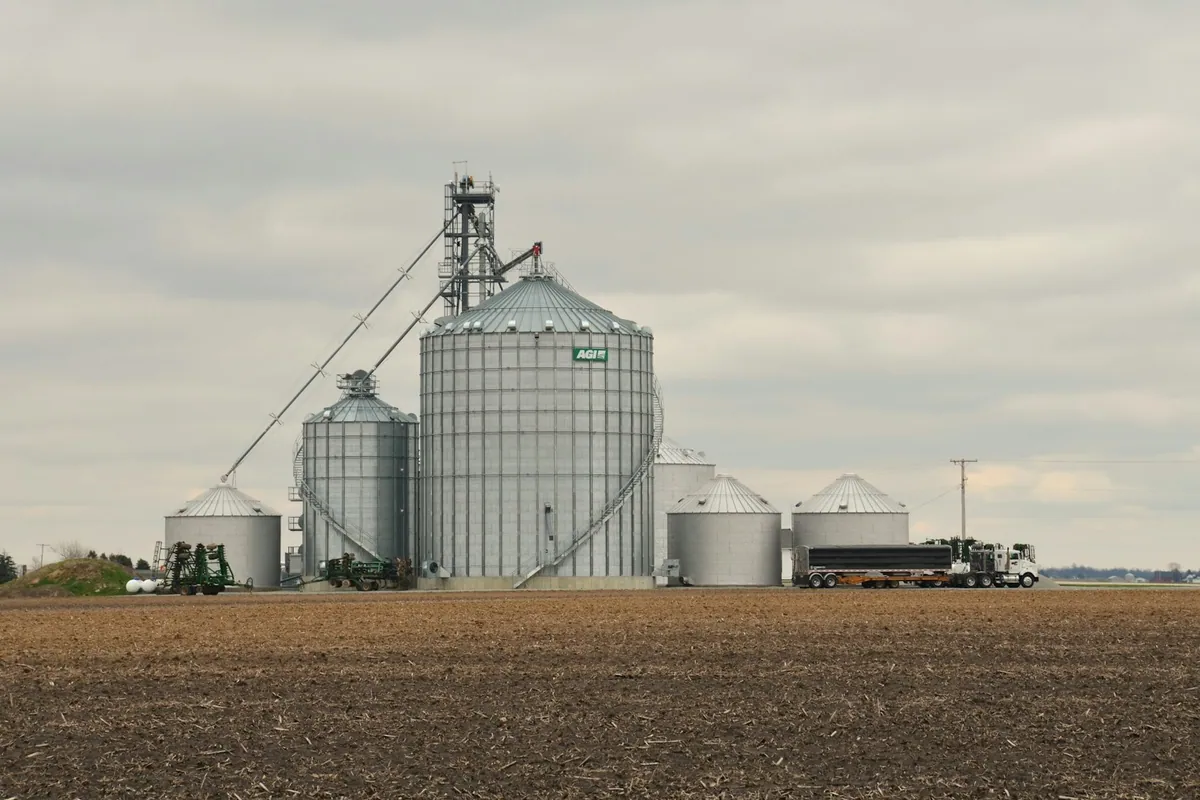
A grain silo needs both bulk-solids and structural design. The material, outlet and filling arrangement affect how loads reach the walls and supports. Start with those inputs before fixing the geometry.
Use the actual material and operating cases
Bulk-solids friction changes the load distribution compared with a liquid. Filling, discharge and eccentric outlets can produce different wall pressures. Specialist references describe these effects; the project still needs calculations for its own geometry, material properties and governing requirements.
Mass flow and funnel flow
In mass flow, the stored material moves during discharge. In funnel flow, material moves through a channel while some remains stationary. Hopper shape, wall friction and material behavior affect the flow pattern. Choose the arrangement through material testing and process design rather than a generic hopper angle.
Inputs to the structural review
- Stored materials, bulk properties and expected variations.
- Fill and discharge points, rates and possible operating combinations.
- The selected flow pattern and applicable material-induced loads.
- Equipment, conveying and access loads, plus site-specific environmental actions.
- Foundation information, inspection access and the proposed maintenance regime.
Coordinate the silo group
Our structural plant engineering service can coordinate silo geometry, support steel and conveying interfaces within the agreed design scope. Model parameters do not automatically validate new load cases; calculations and release approvals must follow each relevant change.
Technical references
Sources for the definitions and design context discussed here. Check the applicable edition and project requirements before using them in design.
- 01Mass flow and funnel flow: material behavior and hopper designJenike & Johanson
- 02Silo load analysis: material properties and design load casesJenike & Johanson
- 03Eccentric discharge and non-uniform wall pressuresJenike & Johanson