On this page
Overview
- The process sequence and storage conditions depend on the dairy product and packaging.
- Define the validated heat treatment, hygiene controls and cleaning requirements with the qualified process team.
- Chilled products and commercially sterile, aseptically packed UHT products have different distribution requirements.
- Coordinate equipment, hygienic piping, utilities and maintenance access around that design basis.
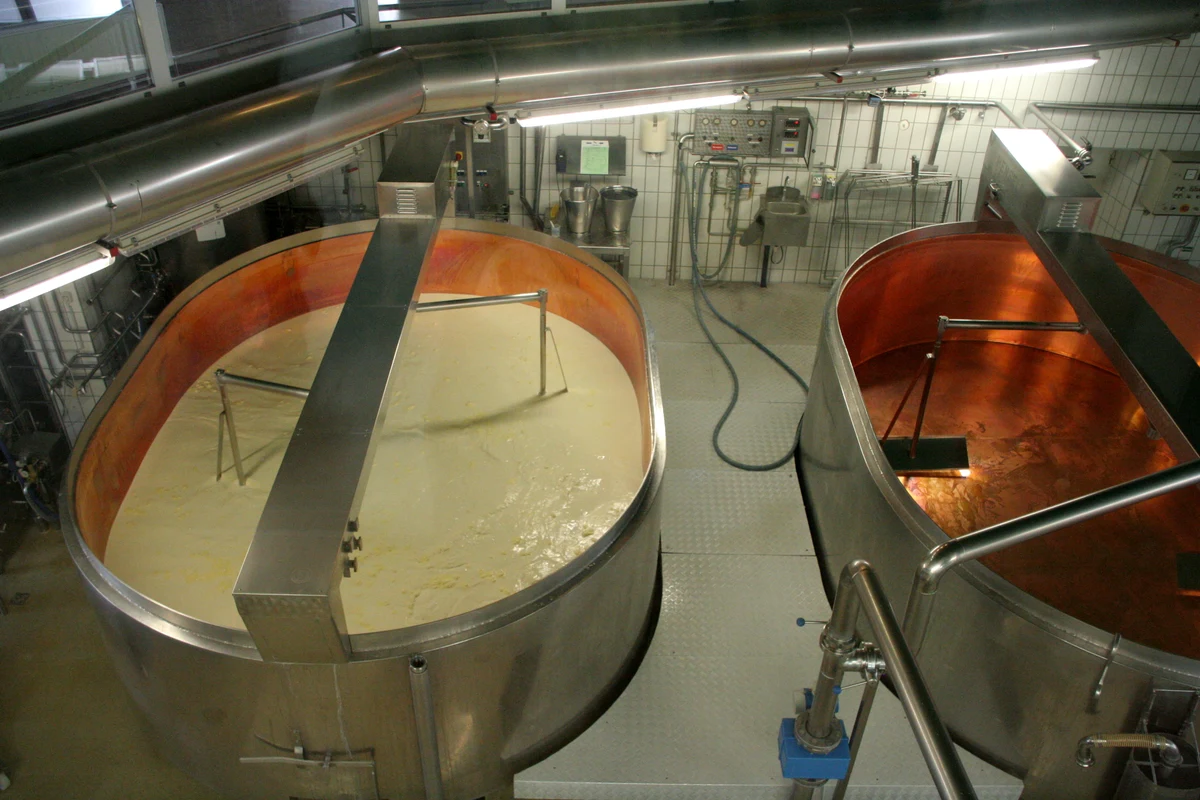
A dairy plant has to move product through processing while keeping it clean and at the right temperature. The design brings together process equipment, hygienic piping, cleaning systems and refrigeration. Product mix, output and food-safety requirements set the brief; maintenance, utilities and future expansion shape the layout.
Define the dairy plant design basis
- Product portfolio, daily and peak throughput, batch sizes, operating hours and planned expansion.
- Raw-milk quality, finished-product temperature limits, segregation rules and allergen requirements.
- Validated time-temperature processes, hold times, divert logic and instrumentation requirements.
- CIP circuits, cleaning recipes, return conditions, chemical handling, water recovery and effluent loads.
- Utilities and refrigeration loads, redundancy philosophy, maintenance access and hygienic zoning.
Scroll sideways to compare
| Deliverable | Minimum content to review |
|---|---|
| Design-basis report | Products, capacities, batches, operating schedule, quality and temperature limits, governing requirements, utilities, expansion and acceptance responsibilities |
| Process definition | Block flow, process flow diagrams, mass and energy balance, equipment duties, time-temperature criteria, control and divert philosophy |
| Hygienic zoning and layout | Raw and treated product segregation, personnel and material routes, drainage, cleaning access, maintenance, waste and future-line interfaces |
| Piping and instrumentation | Sanitary line list, materials, slopes, drainability, dead-leg criteria, valves, instruments, alarms, sample points and P&IDs |
| CIP definition | Circuit boundaries, objects, recipes, hydraulic basis, return criteria, chemical handling, recovery, interlocks, records and validation plan |
| Utilities and cold chain | Refrigeration and chilled-water loads, electrical and steam demand, water quality, compressed air, effluent, insulation and temperature monitoring |
| Responsibility and acceptance matrix | Who supplies inputs, designs, checks, validates, installs, commissions, audits and approves each process and facility system |
The dairy processing flow
- 01Reception & chilling
Receive, test and cool raw milk to the agreed requirements. Chilling slows microbial growth; it does not sterilize the milk.
- 02Separation & standardisation
Centrifugal separators split cream from skim; the fat content is then standardised to the target for each product.
- 03Pasteurisation / UHT
Select and validate the heat-treatment process for the product. Include holding, diversion, instrumentation and any regenerative heat exchange required by that system.
- 04Homogenisation
Homogenization reduces fat-globule size. Its location in the line depends on the selected process and equipment.
- 05Processing & packaging
Milk is packaged, or diverted to cheese, yoghurt, butter, or drying (milk powder) lines.
- 06Storage and dispatch
Maintain refrigeration where the product requires it. Validated UHT treatment with suitable aseptic packaging can support ambient distribution before opening; follow the product specification.
Hygiene, sanitary piping & CIP
Like all product-contact dairy systems, the piping is sanitary: polished stainless, crevice-free joints, fully drainable, and designed as clean-in-place circuits with no dead legs. CIP is run frequently between production cycles, so the entire fluid network must be engineered for reliable, automated cleaning from day one.
CIP sequence and validation criteria
- 01Pre-rinse
Remove recoverable product and loose soil while monitoring return condition and routing the first return appropriately.
- 02Detergent circulation
Deliver the validated chemical concentration, temperature, flow or wall shear, and exposure time to every object in the circuit.
- 03Intermediate rinse
Displace detergent and confirm the return condition before any following acid, disinfectant or final-rinse step.
- 04Final treatment
Run the validated disinfection or final-rinse sequence required for the product and operating regime.
- 05Release and record
Use defined sensor limits, return conditions, alarms and records to demonstrate the circuit completed its validated recipe before production resumes.
Market and regulator requirements must be named
Scroll sideways to compare
| Project context | References and inputs to confirm | Retained authority |
|---|---|---|
| United States and the Americas | Country and state or provincial regulator, product category, FDA Grade “A” PMO or other applicable rules, plant listing or inspection route, validated process and record requirements | The owner, qualified food-safety team, equipment suppliers, laboratory, validator and applicable regulator retain their defined acceptance roles |
| Middle East | Country requirements, competent authority, product and halal requirements where applicable, GSO or Codex references only where adopted, language, water, climate, import and export criteria | GCC references do not replace each country’s law, regulator, certification body, client requirements or product-specific approval |
| Europe | Country and competent authority, product rules, hygiene and food-safety plan, EHEDG guidance where selected, utilities, effluent, cold-chain and validation requirements | EHEDG guidance is not regulatory approval; the food business, appointed specialists, validators and authorities retain their responsibilities |
- Specify product-contact materials, finish, seals and connections for the product and cleaning duty.
- Full drainability and dead-leg elimination for effective CIP.
- Segregation of raw and pasteurised streams to prevent post-process contamination.
- Refrigeration and chilled-water systems sized to hold the cold chain through every step.
Coordinate the dairy plant
A dairy plant succeeds on hygiene, cold-chain integrity, and thermal efficiency together. Spetia Engineering coordinates the sanitary process, refrigeration, structure, slopes, access and CIP circuits in one model so the design can be reviewed against the project’s validated hygiene and operating requirements.
Technical references
Sources for the definitions and design context discussed here. Check the applicable edition and project requirements before using them in design.
- 01Grade “A” Pasteurized Milk Ordinance and NCIMS Model DocumentsUS Food and Drug Administration
- 02Code of Hygienic Practice for Milk and Milk Products (CXC 57-2004)Codex Alimentarius, FAO and WHO
- 03GSO CAC/RCP 57: Code of Hygienic Practice for Milk and Milk ProductsGCC Standardization Organization
- 04Hygienic Design Requirements for CIP Installations, Guideline 50European Hygienic Engineering & Design Group
- 05Hygienic pump design, Guideline 17 working-group updateEuropean Hygienic Engineering & Design Group
- 06Hygienic Design of Disc Stack Centrifuges, Guideline 42European Hygienic Engineering & Design Group
- 07
- 08