On this page
Overview
- Ask who will produce, check and approve the work, and which design responsibilities are included.
- Review relevant samples, data controls and communication arrangements.
- Use a representative pilot to test the proposed team and scope before making a larger commitment.
Choosing a BIM partner means looking beyond software skills. You need to know how the team checks its work, follows your standards and protects project information. Ask for relevant examples and test the working relationship on a small package before making a larger commitment.
Check the responsibilities behind the label
“Partner” and “vendor” are commercial labels. What matters is the appointment: who develops the design, who models it, who reviews it and who closes questions. Ask the proposed team to show how those responsibilities worked on a relevant example.
What to check before appointing a partner
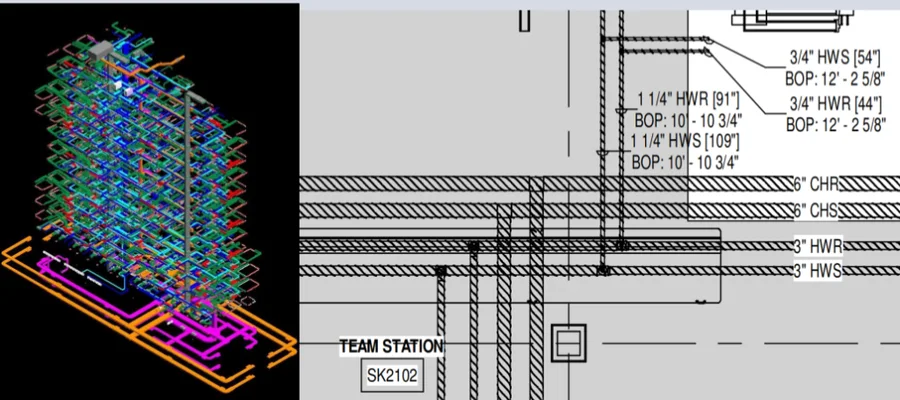
- Coordination capability: can they federate and clash-coordinate multi-discipline models, not just model single disciplines?
- QA rigour: what is their review process and measured error rate? Multi-tier senior review is a strong signal.
- Standards alignment: do they work natively to ISO 19650 and to your BIM standards and CDE?
- Agree working-hour overlap, response times and a named point of contact.
- Security: NDAs, access control, and data-security practices for confidential client work.
- Client-branded delivery: confirm subcontracting permissions, required credit, confidentiality and review responsibility.
Agree a testable work package
Spetia can work as an extension of the client team under documented information requirements, review stages, quality measures, confidentiality terms, data controls, communication windows, and acceptance criteria. A bounded pilot is the place to test the proposed method and outcome.
Technical references
Sources for the definitions and design context discussed here. Check the applicable edition and project requirements before using them in design.
- 01
- 02